Reservation
Why Book with us?


Few places in India capture the quiet magic of the wild quite like Jim Corbett National Park. Set across the Himalayan foothills in Uttarakhand, India’s oldest national park is a landscape where dense sal forests meet shimmering rivers, and the sounds of the forest become part of the experience. A spontaneous weekend getaway or a thoughtfully planned trip to Jim Corbett, both can be equally rewarding. The destination offers something special: a true connection with nature, complemented by scenic landscapes, outdoor adventures, and moments of quiet relaxation.
This guide brings together everything you need to know before visiting Jim Corbett. It covers how to plan your journey and the most memorable things to do once you arrive.
Getting There: Reaching Jim Corbett
Getting to Jim Corbett is convenient, with good road, rail, and air connectivity from major cities across North India.
By Road: Jim Corbett is well connected by a network of national and state highways, making it easily accessible by private vehicle, taxi, or bus. Road trips from Delhi and surrounding areas are a popular choice.
By Rail: Ramnagar Railway Station is the nearest railhead and is connected to several major cities. From the station, taxis are readily available to the national park and nearby resorts.
By Air: Pantnagar Airport is the nearest airport. Visitors can hire a taxi from the airport to reach Jim Corbett.
By Bus: Regular state-run and private buses operate to Ramnagar from several cities, making it a convenient option for travellers.
Pro Tip: Aim for an early morning departure from Delhi. Arriving by the afternoon allows you to settle into your resort and be well-rested for a dawn safari the following day.
Jim Corbett Safari: The Heart of the Experience
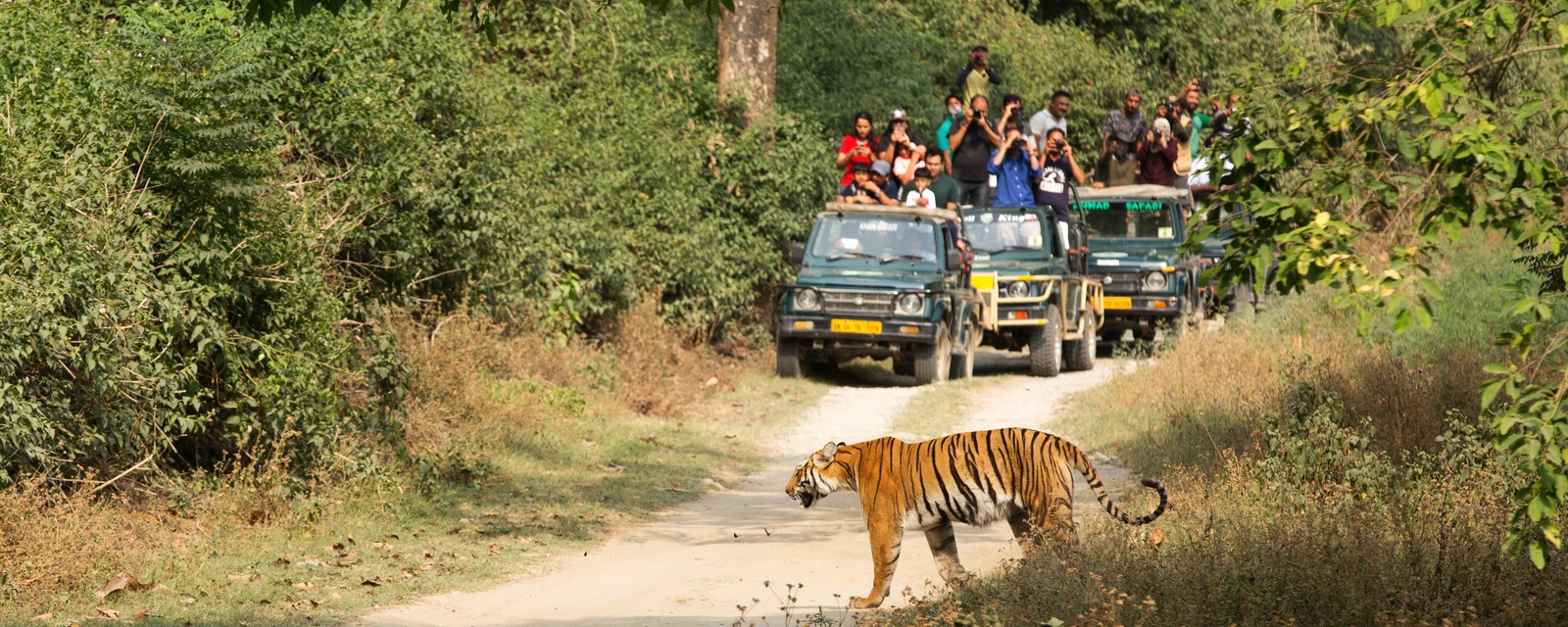
A visit to Jim Corbett is rarely complete without heading out on a safari. It is not just another item on a travel checklist but an opportunity to experience one of India’s most biodiverse ecosystems. The park is divided into eight ecotourism zones: Dhikala, Bijrani, Jhirna, Garjiya, Sitabani, Pakhro, Dhela, and Durga Devi. Each zone offers a different terrain and chances to spot wildlife, though tiger sightings are reported fairly evenly across all of them.
The Dhikala zone is the largest and most famous part of the park, offering wide grassland landscapes and a strong chance of spotting elephant herds and even the elusive Bengal tiger. Bijrani and Jhirna are more accessible and ideal for day safaris, which makes them popular with first-time visitors. Durga Devi, hillier and more rugged, is especially rewarding for birdwatchers thanks to its impressive variety of birdlife. Dhela, the newest of the originally added zones, is known for its rich mix of grassland and forest and is considered one of the best spots for birding. Garjiya offers a serene, densely forested landscape and gives Dhikala tough competition when it comes to tiger sightings. Sitabani, a buffer zone rather than part of the core tiger reserve, is prized for its temples, open access by private vehicle, and an especially wide range of migratory bird species. Pakhro, the newest addition, opens up a fresh, less-crowded route into the reserve for travellers approaching from the Kotdwar side.
Safari permits must be booked in advance, especially during peak season (November to June). Guests can explore the park through jeep safaris or canter safaris. Early morning departures are often the most preferred, as the golden sunlight, cool breeze, and active wildlife make the outing particularly special.
Guests staying at Welcomhotel by ITC Hotels, Jim Corbett, situated approximately 45 minutes from the park, can arrange the safari experience directly through the hotel, with bookings coordinated well in advance to ensure the best possible slot.
5 Unforgettable Things to Do in Jim Corbett
Beyond the thrill of the jeep safari, the region offers a wealth of soulful experiences.
1. The Temple Trail Trek
For travellers drawn to slower, thoughtful experiences, several trails near the reserve lead through soft, misty valleys to the Garjiya Devi Temple, a centuries-old shrine perched on the banks of the Kosi River with impressive views of the inner Himalayan foothills. Guided walking trails of varying length are available in the area, most taking under an hour and winding through rich greenery before reaching the temple.
2. Premier Birdwatching
With over 600 recorded bird species, Corbett is one of Asia's most rewarding birding destinations. Birdwatchers may spot the Crested Serpent Eagle, the Oriental Pied Hornbill, and the rare Ibisbill along the park's rocky riverbeds.
3. Riverside Relaxation by the Kosi
The turquoise Kosi River is the lifeline of the valley, running along the park's western edge. Many stays and outfitters in the region offer riverside picnics and outdoor meals where guests can unwind to the sound of flowing water, a peaceful counterpoint to the pace of a safari day.
4. Village Walks and Cultural Discovery
Explore the traditional Kumaoni way of life through guided walks around villages near the reserve. Discover terraced fields, stone homes, and local folklore that add genuine depth to a wildlife trip. Nearby Kaladhungi is also home to the Corbett Museum, Jim Corbett's former cottage, for those interested in the region's conservation history.
5. Nature Photography
The golden light of dawn spreading across the sal canopy and the calm reflection of the Himalayan foothills in the Ramganga and Kosi rivers create extraordinary moments for photography throughout the reserve.
Conclusion
A visit to Jim Corbett can feel like a welcome pause from the rush of everyday life. It is a place that reminds you how powerful and peaceful the natural world can be when left to follow its own rhythm. Some travellers come hoping for a glimpse of the Bengal tiger, while others seek the quiet charm of the Himalayan foothills or a moment to slow down and breathe. Jim Corbett delivers these experiences with quiet grace. Plan well, arrive early, and let the wilderness shape the experience.
Plan Your Stay at Welcomhotel by ITC Hotels, Jim Corbett
After a day exploring Jim Corbett, returning to a peaceful sanctuary makes the experience even richer, and Welcomhotel by ITC Hotels, Jim Corbett offers exactly that atmosphere. Perched on a hill with panoramic views of the Kosi Valley and the inner Himalayan ranges, the premium resort brings together refined comfort, thoughtful hospitality, and a close connection with nature.
What sets Welcomhotel Jim Corbett apart:
Make your Jim Corbett itinerary unforgettable with these exclusive highlights:
Plan your stay at Club ITC Hotels in Jim Corbett and discover the wild while enjoying warm hospitality, elegant rooms, top-notch amenities and unique travel plans now.